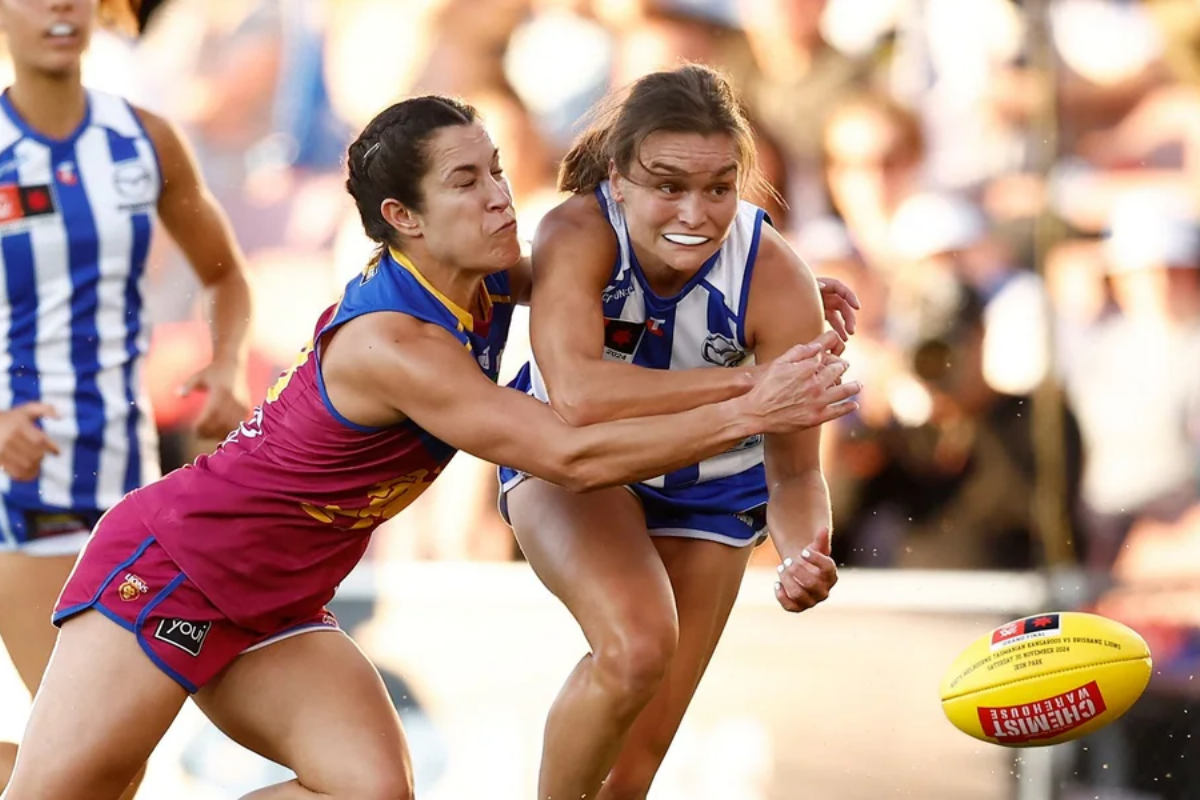
There’s something different about the 2025 AFLW Grand Final. Yes, it’s North Melbourne and Brisbane again, but this doesn’t feel like a simple continuation of the last two years. Through the lens of AFLW Grand Final stats, this matchup looks like a broader moment for the competition: a test case for where modern AFLW football is heading. North arrive as the unbeaten architects of system-based dominance. Brisbane arrive as the disruptors — the team that champions pressure, thrives in turbulence and tends to change the rhythm of games when opponents least expect it.
This year, it feels as though the league is watching two philosophies collide rather than two teams replay a fixture.
What the Numbers Say About How These Teams Have Changed
The data paints a story far richer than just “one-all” across two previous Grand Finals. Brisbane’s 2023 win wasn’t just a victory — it was an argument for pressure as a pathway to premiership success. North Melbourne’s 2024 triumph wasn’t just a reply — it was proof that structure could be rebuilt, refined and successfully weaponised.
The 2025 season has only made the divide clearer.
2025 Season Comparison
| Metric | North Melbourne | Brisbane |
|---|---|---|
| Scoring Output | Efficient, measured | Turnover-fuelled, unpredictable |
| Inside 50 Efficiency | Among league’s best | Rising, but inconsistent |
| Tackles | Controlled intensity | High-pressure identity |
| Forward Half Time | League-leading | Dependent on momentum swings |
| Intercept Marks | Shared defensive burden | Dunne-led reliability |
| Centre Clearances | Riddell-driven | Strong in patches |
The contrast isn’t subtle — it’s almost philosophical. North win games by ironing out chaos. Brisbane win games by manufacturing it.
One needs the game to slow.
The other needs the game to breathe fire.
The Influence of Venue, Conditions and Individual Stars Through the Lens of AFLW Grand Final Stats

Ikon Park often decides which identity thrives. Its wide layout favours teams that spread the ground and move with purpose — an area North have mastered. But the same width also exposes opponents if Brisbane force turnovers near the boundary and launch quickly across open space. It’s not unusual for Brisbane to score in clusters here, especially when their pressure turns into fast play.
Weather complicates the picture — and may lean toward the Lions. Rain reduces the value of uncontested marks and rewards teams who win ground ball and force repeat contests. Earlier this season, Brisbane produced one of their strongest defensive quarters in wet conditions, locking the ball inside their forward half almost entirely through pressure — a small but telling example of how their style thrives in unpredictability.
Individual impact also shapes the storyline.
Jasmine Garner’s contested strength and timing remain the centrepiece of North’s approach. Ash Riddell’s composure and stoppage work continue to define North Melbourne AFLW stats. Blaithin Bogue offers new dimensions with her reactive pressure and transitional speed.
For Brisbane, Courtney Hodder sparks emotional momentum, Jennifer Dunne stabilises the airspace behind the ball, and Neasa Dooley has emerged as the defender who rarely gets beaten twice. These roles shape not just outcomes but the rhythm of the contest.
The Tactical Argument: Control vs Chaos, and Why This Grand Final Matters

If the first two Grand Finals were about results, this one feels like it’s about meaning. North Melbourne embody the modern ideal of controlled, predictable football. They slow opponents down, shape possession, and build relentless pressure through territory and repeat entries.
Brisbane represent something older, rawer — the belief that pressure can break structure and force football back into instinct. Their best moments come from:
• chaos at the contest
• turnovers in vulnerable zones
• quick transitions that punish hesitation
The editorial question becomes: which football identity should the AFLW value more?
North Melbourne’s case is clear — sustained system, clean decision-making, a defensive press that rarely leaks cheap scores. Brisbane’s case is equally compelling — pressure-based unpredictability, emotional intensity, and the ability to flip momentum in one electrifying burst.
Predictive metrics lean slightly toward North because control tends to be more replicable. But Brisbane have made a habit of breaking patterns, not fitting them. Based on recent form and statistical indicators, the expected range sits with North by 6–13 points — slim enough for a single chaotic quarter to decide everything.
Conclusion — The 2025 Decider Through the Lens of AFLW Grand Final Stats
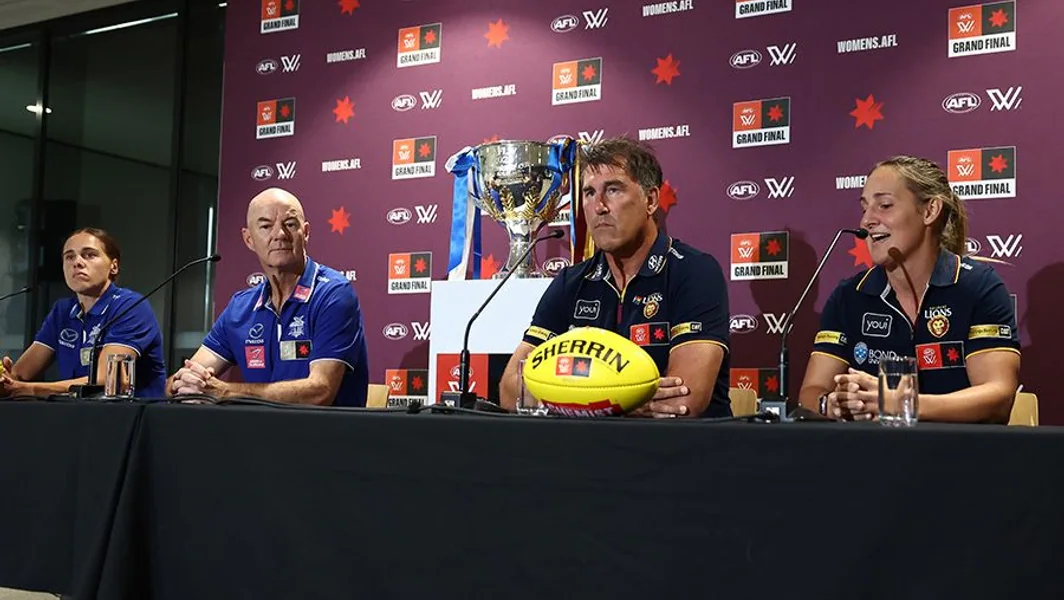
Viewed through AFLW Grand Final stats, the 2025 decider becomes more than a third meeting. It becomes a question of which version of AFLW football defines the next era. Will it be North Melbourne’s structured, repeatable dominance? Or Brisbane’s pressure-driven volatility that thrives in the cracks of control?
Whichever way it breaks, this Grand Final feels like a benchmark moment — not just for the season, but for what the league chooses to value, reward and build upon in the years ahead.
FAQs
About the Author