
When Australia arrives in the lush hills of Kandy for the second leg of their T20 World Cup 2026 group stage, they will face more than Sri Lanka and Oman. Crucially, they will confront a surface that has long reshaped T20 bowling trends. While R. Premadasa Stadium in Colombo is known for attrition, Pallekele International Cricket Stadium presents a subtler challenge. Notably, that challenge aligns perfectly with Australia’s recent tactical pivot.
The “Muralitharan” Surface: A Spinner’s Paradise

Pallekele earned its unofficial nickname—the Muttiah Muralitharan International Cricket Stadium—for good reason. Over time, the venue has consistently rewarded slow-bowling craft over raw pace.
- The Stoppage of Pace
- Recent data from 2024 and 2025 shows fast bowlers in Kandy record significantly higher averages than spinners. Unlike Australian pitches, the surface offers little carry. As a result, seamers such as Pat Cummins and Josh Hazlewood often rely on cutters and slower-ball bouncers rather than hit-the-deck pace.
- The Leg-Break Advantage
- Historical T20I figures at Pallekele highlight another trend. Leg-break bowlers enjoy the lowest economy rates. The dry, abrasive square allows the ball to grip early, which directly benefits bowlers like Adam Zampa even in the powerplay overs.
- High Scoring, With a Twist
- Despite its spin-friendly nature, Pallekele remains a high-scoring ground. First-innings totals typically sit between 175 and 185. Consequently, matches often hinge on “defensive” spin. In this environment, conceding seven an over while others leak ten becomes a decisive advantage.
Maxwell’s Happy Hunting Ground
If one Australian welcomes the Kandy schedule, it is Glenn Maxwell. He holds the record for the highest individual T20I score at this venue—an explosive 145* off 65 balls against Sri Lanka in 2016.
Moreover, Maxwell’s understanding of Pallekele’s short square boundaries makes him especially dangerous. Recently, he noted that the new ball “grips the hard seam” on dry surfaces. Therefore, he could even take the new ball in the powerplay before evening dew reduces grip.
Tactical Pivot: Why Bartlett and Not a Left-Arm Quick?
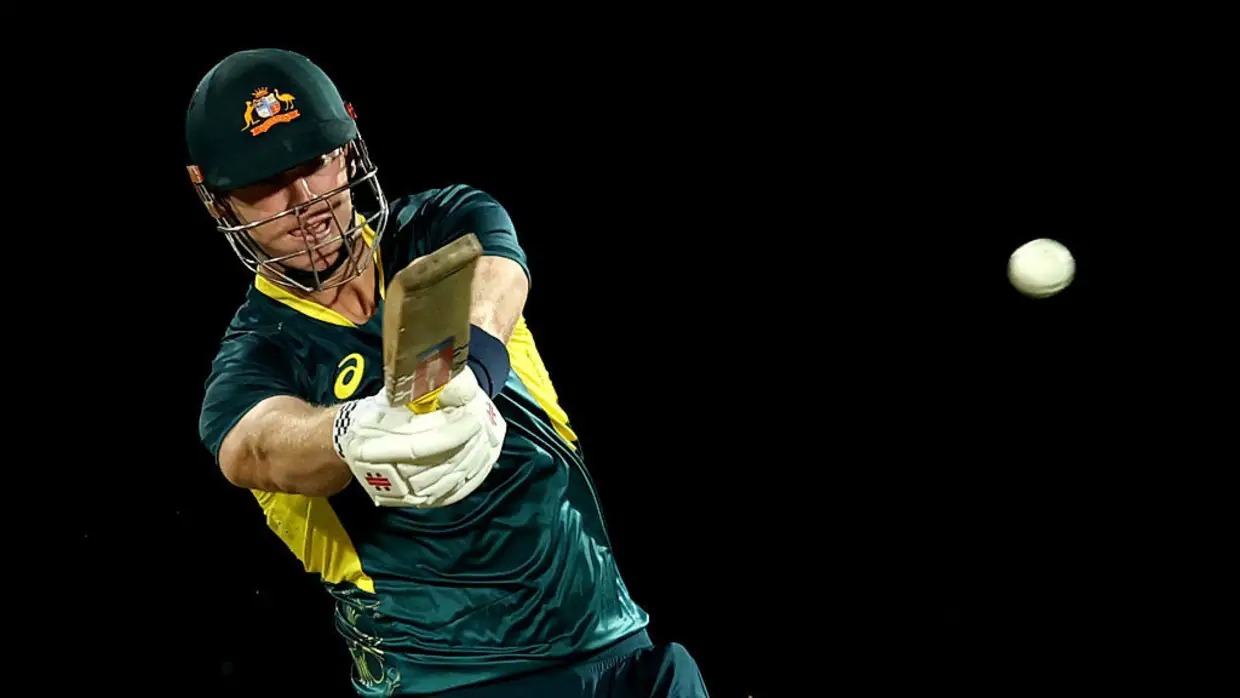
The decision to pick Xavier Bartlett over a traditional left-arm successor to Mitchell Starc was largely influenced by the Pallekele factor.
- Control Over Angle: On the low-bounce Kandy wickets, the “angle” of a left-arm pacer is often negated if they cannot find swing. Bartlett’s ability to bowl “heavy” lengths and extract subtle seam movement from a straight line is seen as more effective at keeping the run rate under control when the pitch is flat.
- The Spin Twins: By naming both Matthew Kuhnemann and Cooper Connolly, Australia can field a “Twin Left-Arm” attack.This is a direct response to Sri Lanka’s middle-order, which historically struggles against the ball turning away from the right-hander on the Kandy deck.
T20 World Cup 2026: The Kandy Schedule (AEDT)
As the tournament shifts from the humidity of Colombo to the cooler air of the Hill Country, Australia’s ability to read the Pallekele pitch will likely determine whether they enter the Super Eight stage as group leaders or desperate qualifiers.
Pallekele Match Intel: Australia vs Group B
About the Author